
Before a Culm Dump Can Be Reclaimed, It Has to Be Permitted
Scranton's skyline still holds black banks of coal waste. Turning one into grass or a development site runs through a public permitting and reclamation process — here is how it works.
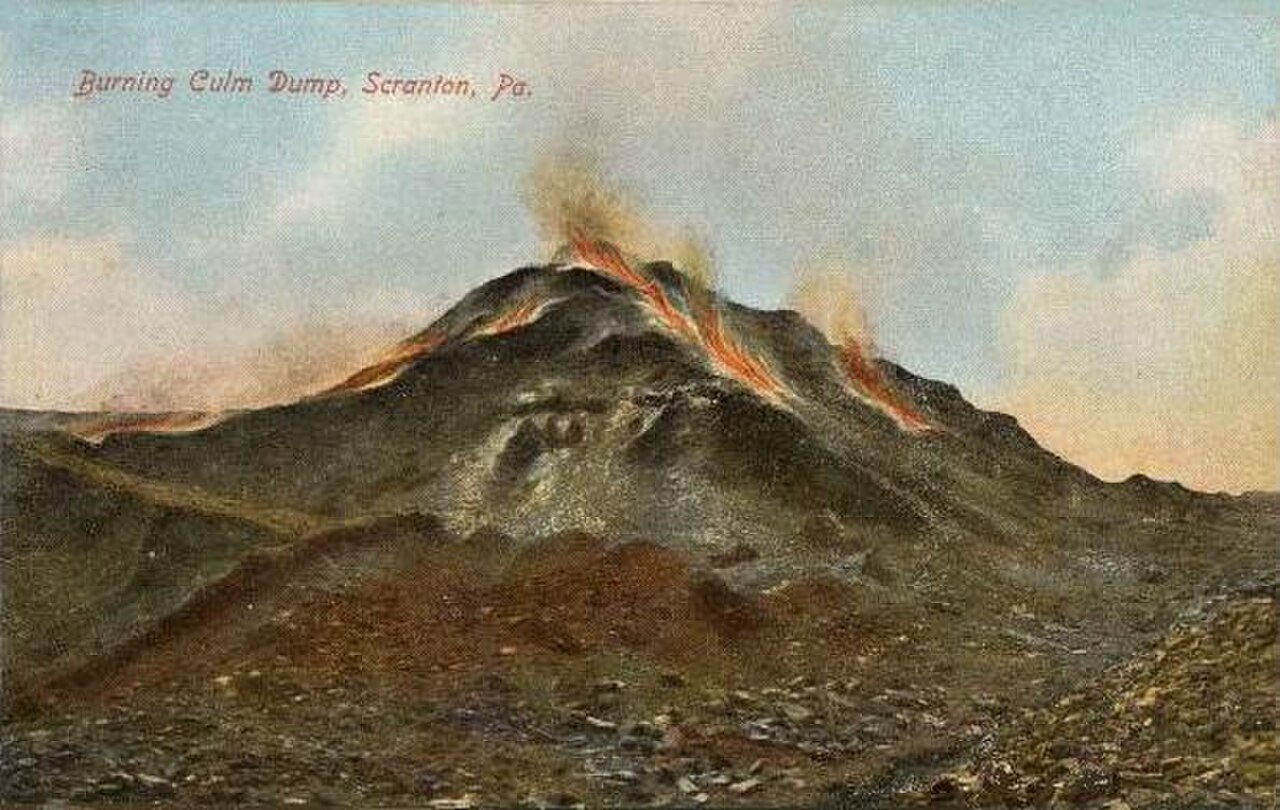
They are the valley's black hills: culm dumps, the steep banks of coal refuse left across Scranton and Lackawanna County by a century of anthracite mining — some of which, in the industry's heyday, literally burned for years. Reclaiming one is not a matter of hiring a bulldozer. It runs through one of Pennsylvania's most layered public processes, and understanding it explains why these sites change slowly.
The framework has two doors. Where a dump is tied to an active or proposed mining operation, Pennsylvania's mining law requires permits through the Department of Environmental Protection, with public notice, comment periods and bonding — money posted in advance to guarantee the reclamation gets finished even if the operator fails. Where a site is a legacy of the abandoned era, the state's Abandoned Mine Land program, funded by a federal fee on coal production, ranks sites by hazard and reclaims them with public money in priority order.
The permitting record is the public's window: applications, engineering plans for grading and drainage, and agency decisions are public documents, obtainable through the DEP's public files and, where an agency holds them, through Pennsylvania's Right-to-Know Law. In Scranton, the related hazard of mine subsidence — the ground over old workings — has its own state bureau history in the city, dating to a 1913 state law passed after cave-ins damaged whole neighborhoods.
For residents near a dump in Green Ridge, South Scranton or the valley's boroughs, the actionable knowledge is procedural: projects surface first as notices and permit files, comment periods are real deadlines, and the paper trail starts years before the first machine arrives. The black hills took a century to build; the process that unmakes them is deliberately, documentably slower.