How Scranton Became the Electric City
The big illuminated sign over downtown tells a true story: Scranton ran one of the nation's first successful electric streetcar systems, and the nickname never left.
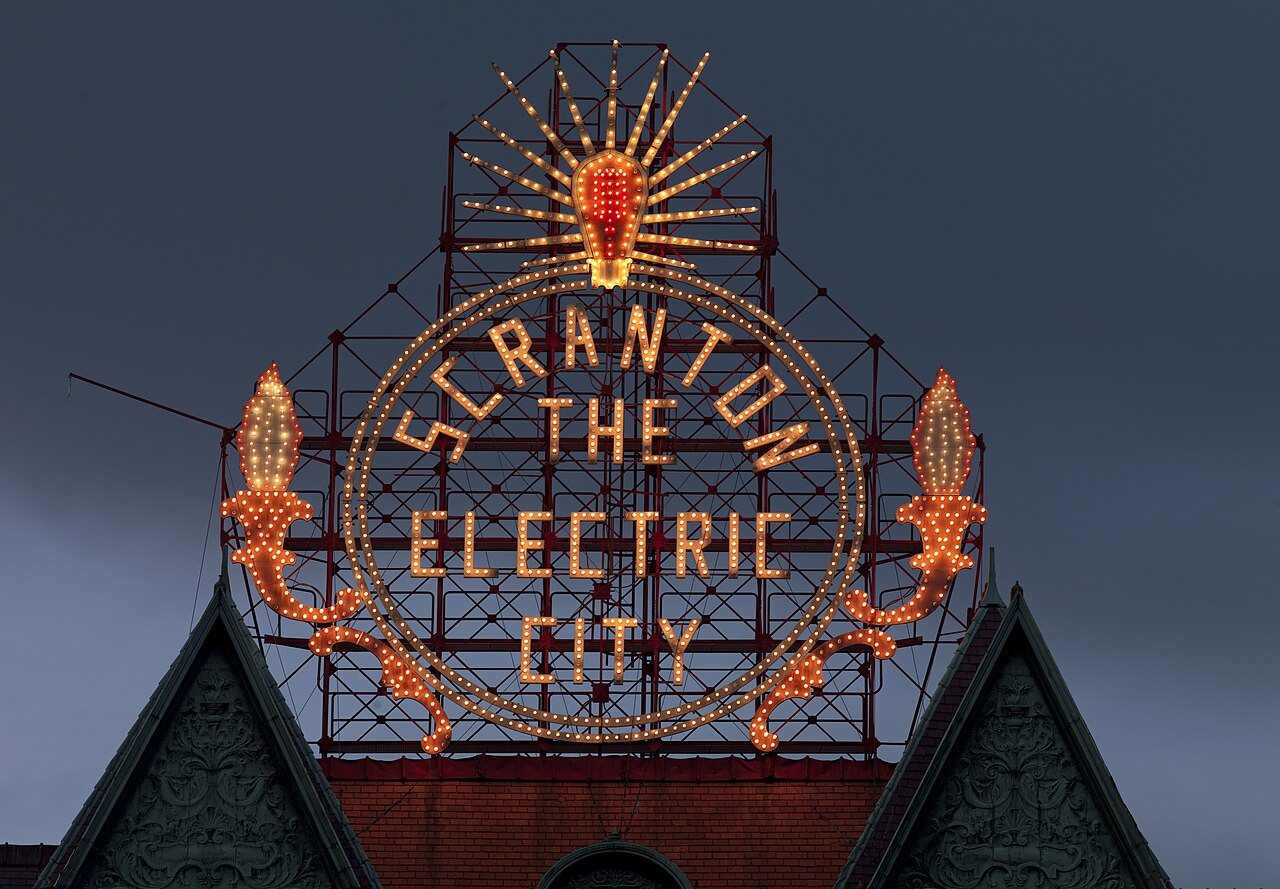
The sign is not a slogan; it is a citation. Scranton's famous Electric City sign, restored in 2008 and glowing again over downtown, commemorates the fact that this city was among the first in America to run a successful, continuously operating electric streetcar system, launched in 1886.
Electricity arrived in Scranton as practical infrastructure before it was a brand. The city was an early adopter of electric lighting and street railways because its industries — coal, iron and rail — demanded power and moved thousands of workers daily. The trolley network that followed stitched the valley together: by the early 1900s, riders could travel from downtown to Clarks Summit, to Wilkes-Barre on the Laurel Line interurban, and across the neighborhoods that the mines and mills had built.
The streetcars are gone — Scranton Transit converted to buses in the 1950s, and county-run COLTS buses carry the transit role today — but the trolley era survives in working order at the Electric City Trolley Museum, which preserves Pennsylvania streetcars and runs excursion trolleys from downtown toward PNC Field on Montage Mountain.
The nickname outlasted the technology because it captured something accurate about the place: a coal city that wired itself early and lit itself bright. Residents who have watched the sign's letters glow over Lackawanna Avenue understand the local logic — in Scranton, history is not kept in a case. It is kept lit.
For newcomers, the quickest orientation is to see the sign at night from Courthouse Square, then visit the trolley museum by day. Between the two, the whole claim of the Electric City explains itself.